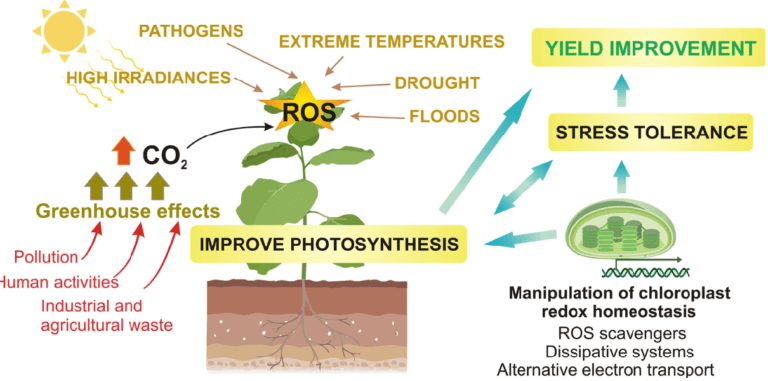
Climate change increases the intensity of environmental stress, such as drought and heat waves, affecting photosynthesis and crop growth, which are essential for a growing population. The redox metabolism of the chloroplast, including photosynthetic electron transport and reductive CO2 assimilation, are primary targets of stress conditions, leading to excessive excitation pressure, photodamage, and the propagation of reactive oxygen species. These alterations in the redox state generate signals from chloroplasts that modulate plant responses to adverse environmental conditions.
The project aims to optimize alternative energy dissipation and photoprotection processes by studying conserved and organism-specific strategies in photosynthetic systems to better understand and manipulate photosynthesis. This effort seeks to enhance crop productivity and resilience to address the adverse climatic conditions forecasted.


📦🔬 Unboxing científico en el IBR
Llegaron los componentes de un microscopio de superresolución que permitirá ver cómo se organizan las moléculas dentro de las células.
Parte de las Redes Federales de Alto Impacto.
⚙️ Comienza el ensamblaje. #SuperResolution #Nanoscience